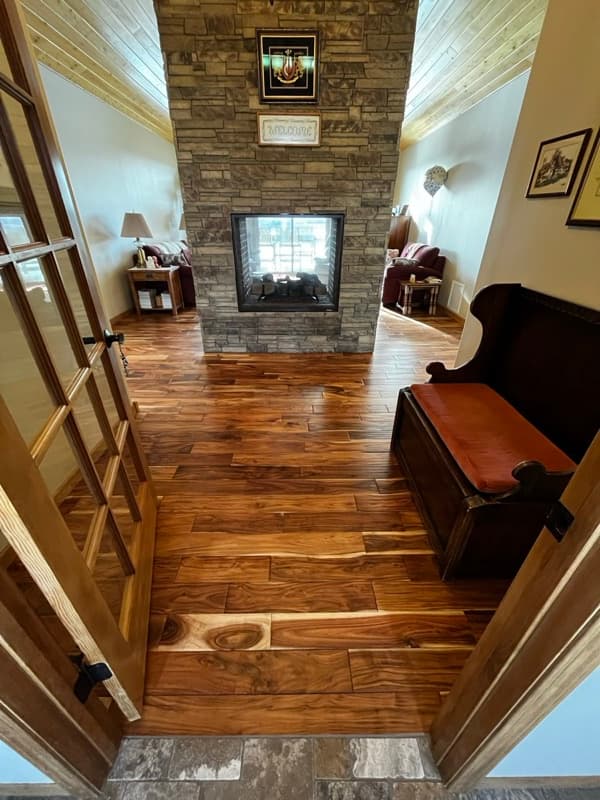
Why Summer Sun Hits Hardwood Harder in the Bighorn Basin
By mid-June in Cody and Powell, the mud has dried, the days stretch long, and that famous Wyoming light pours through every south and west window. It feels wonderful. Your hardwood floors feel it too.
At elevation in the Bighorn Basin, summer sun is not the same gentle glow you get at sea level. The air is thinner, UV intensity is higher, and the outdoor humidity often stays stubbornly low. Together, those conditions fade color, stress finishes, and keep wood in a drier state than many homeowners expect this time of year.
At Legacy Wood Floors, Jared Stevenson and his family see the same pattern every summer: floors that looked fine in May start to show pale patches by the patio door, thin finish in the sun path, and gaps that never quite closed after winter.
Here is why summer sun hits hardwood harder here than almost anywhere else, and what local homeowners can do to protect their investment before fall.
High-Altitude Light Is a Different Animal
Wood finishes and natural pigments are sensitive to ultraviolet light. In the Bighorn Basin, stronger UV means the same afternoon of sun does more work on your floor than it would in a lower, cloudier climate.
That is why you often notice a “picture frame” effect: the floor under a rug or sofa stays rich and dark, while the boards in the direct light path look washed out or uneven. The wood itself is not ruined overnight. The color and the finish are simply aging faster where the sun lands every day.
Large western windows, glass patio doors, and open ranch-style floor plans (all common around Cody) create long, concentrated sun paths. Those are the zones that need the most attention in June and July.
“At elevation, the same afternoon of sun does more work on your floor than it would in a lower, cloudier climate.”
UV intensity in the Bighorn Basin accelerates fading along window and patio-door paths, leaving the classic light-and-dark contrast homeowners notice by midsummer.
Dry Season Does Not End When Winter Does
Winter gapping gets most of the attention, and for good reason. But June in Wyoming can still deliver very dry indoor air, especially once swamp coolers or air conditioning kick on and windows stay open on windy afternoons.
Wood moves with moisture. If relative humidity stays low, boards may never fully return to their late-summer width. Tiny gaps that opened in January can linger well into the warm months. That does not always mean failure. It often means your home's indoor climate never gave the wood a chance to recover.
Pair that dryness with direct sun (which also warms the surface of the boards) and you get a floor that is both fading and remaining under moisture stress at the same time. That combination is uniquely hard on hardwood in our region.
How to Protect Hardwood Through a Wyoming Summer
You do not need to live in the dark. A few disciplined habits go a long way in Cody, Powell, and the surrounding Basin communities.
Break Up the Sun Path
Sheer curtains, UV-filtering window film, or strategically placed area rugs along south and west exposures can dramatically slow uneven fading without darkening your whole home.
Rotate Rugs and Furniture
Every few months, shift rugs and rearrange heavier pieces so the wood underneath gets the same light as the rest of the floor. You will catch fade patterns early this way.
Keep Guarding Against Grit
Mud season may be over, but summer still brings driveway dust, gravel, and patio grit. Soft mats at every exterior door and a quick daily dust mop still matter.
Watch Indoor Humidity
Aim for a stable indoor range (ideally around 35 to 50 percent relative humidity). A simple hygrometer near your main living area tells you when the air is getting too dry again.
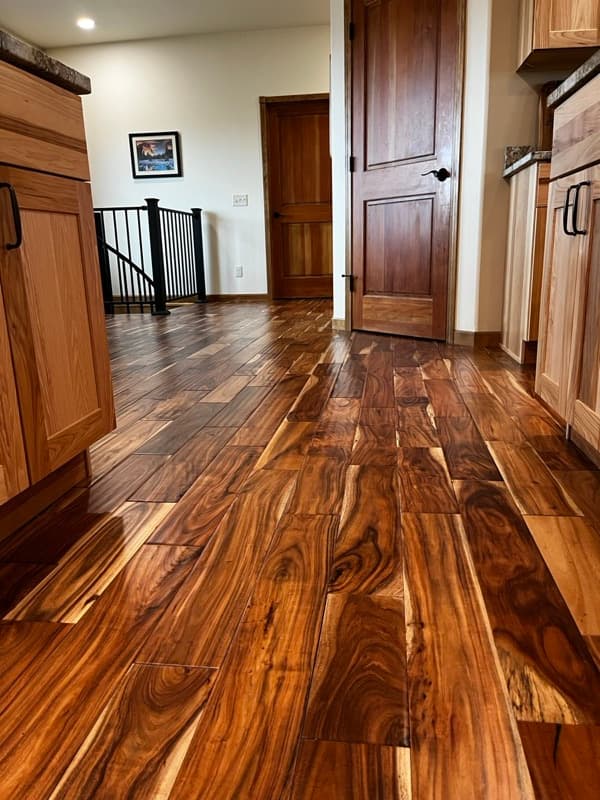
Direct sun paths show up fast on character hardwood. Protection and the right finish make the difference.
When Summer Wear Means It Is Time to Call
Maintenance protects what is still healthy. Restoration brings back what the sun and traffic have already taken. Watch for these signs:
Uneven Color Across the Same Room
Boards under windows look washed out compared with the same species under furniture or rugs.
Finish That Feels Thin or Chalky
Sun and traffic together can burn through the protective coat, leaving wood more vulnerable to stains and moisture.
Gaps That Never Fully Closed
If winter gapping is still obvious in June, your home is likely staying dry enough that the floor never fully recovered.
If those issues sound familiar, summer is actually an excellent time to restore. You get the floors looking their best for the rest of the entertaining season, and you head into next winter with a fresh, protective finish. By August, pale sun paths often harden into the shadow lines we cover in our guide to protecting hardwood from blazing Wyoming sun. You can see the difference in our recent Bighorn Basin projects.
At Legacy Wood Floors, we restore with Old World craftsmanship and modern German-engineered sanding equipment built around advanced dust extraction. The result is a virtually dust-free process, exceptional flatness, and a pristine surface for superior finish bonding, so your home stays immaculate while we bring the color and sheen back to life.
Virtually Dust-Free Sanding
Our German-engineered machinery features advanced dust extraction, so we can strip faded finish and summer wear without turning your home into a construction site.
Finish Built for Basin Light
A clean, perfectly flat surface lets commercial-grade finishes bond deeply, restoring rich color and giving your floors stronger protection against daily traffic and Wyoming sun.
Ready to Outsmart a Wyoming Summer?
Whether your floors need smarter sun protection or a full dust-free restoration, the Stevenson family is here to help you build and protect a floor that lasts. Schedule a consultation and let us walk your home with you.